For adults with disabilities navigating life in America, the promise of the Americans with Disabilities Act was never meant to define the limits of what they could achieve or who they could become.
And yet, for many adults with disabilities living at home today, one of the biggest barriers to independence is not physical. It is the deeply rooted misconception that needing support is the opposite of living freely.
It is not. In many cases, the right in-home support is exactly what makes independence possible.
The Misconception That Keeps Families Stuck
Ask most people what “independent living” looks like for someone with a disability, and they often describe one of two extremes: complete self-sufficiency or full institutional care. But most people live somewhere in the middle, where the right kind of support makes a full, self-directed life possible at home.
This misconception costs people. It keeps families struggling through caregiving arrangements that are no longer working. It makes adults with disabilities feel like they should need less help than they do. It also frames professional care as a last resort instead of what it often is: a practical tool for living better.
True independence is not the absence of support. It is having control over what that support looks like.
What Self-Directed Living Looks Like Day to Day
Independence, in any meaningful sense, comes down to choice. Who enters your home. When you wake up. What you eat. How your day unfolds. For adults with physical, cognitive, or developmental disabilities, these choices do not disappear because support is involved. They often become more achievable because the right support removes the barriers standing between a person and the life they want.
Here is what that can look like in practice.
The Social and Emotional Layer
One of the quieter struggles for adults with disabilities living at home is isolation. Limited mobility, transportation barriers, communication challenges, or the exhaustion of managing a complex routine can shrink a person’s world significantly.
This is where companion care plays an important role. It is not a luxury. It can be a genuine support for mental health, social connection, and daily engagement. A companion caregiver is not just company. They are a consistent presence who helps someone stay engaged, accompanied, and connected to life beyond four walls.
The Physical and Personal Layer
Bathing, grooming, dressing, and hygiene are deeply personal. For adults who need help with these tasks, how that help is delivered matters enormously.
Personal care provided with skill and sensitivity is not dependency. It is what makes many mornings possible. It can be the difference between starting the day with dignity and spending limited energy on tasks that leave someone depleted before the day truly begins.
A trained caregiver moves at the person’s pace, respects their preferences, and treats personal care as a collaborative process rather than something done to someone.
The Practical, Everyday Layer
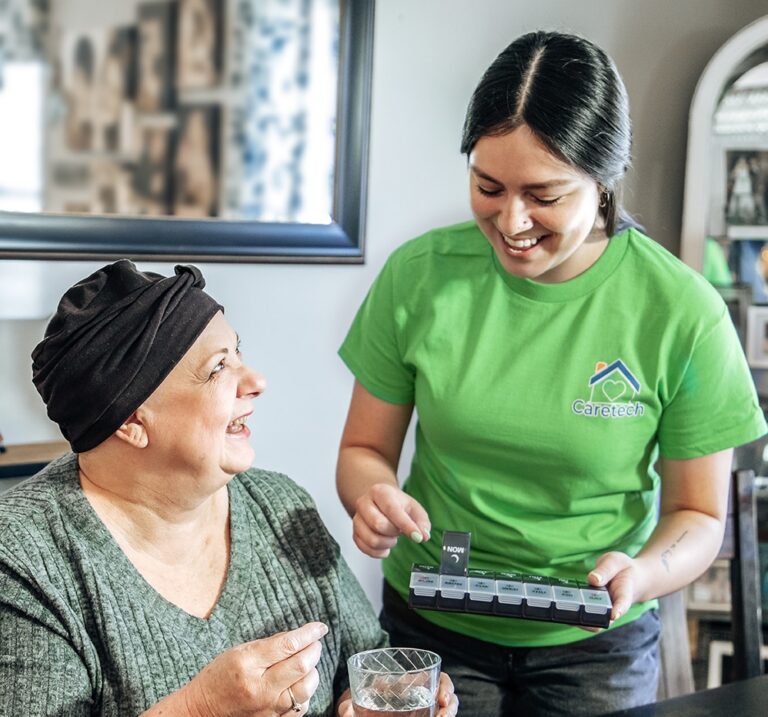
Meal preparation. Medication reminders. Appointment support. Keeping the home organized in a way that makes functional sense for the person who lives there. This is the world of daily living assistance, and it is easy to underestimate how much it anchors everything else.
When the basics of daily life are running smoothly, people have more energy to focus on the things that make life meaningful: work, relationships, hobbies, routines, and personal goals.
The Continuous Support Layer
For adults with higher or more complex support needs, the option to live at home can depend on having care available around the clock.
24-hour home care is more than a safety net. For many people, it is what makes home a realistic option at all. It helps someone remain in familiar surroundings, maintain their routines, and stay close to the people and places they know.
That continuity has real value. Home care is not a consolation prize for people who cannot live in a facility. For many adults with disabilities, it is the preferred, chosen, actively protected option because they deserve to live where they feel most at home.
The Family Dynamic Nobody Warns You About
There is a conversation that happens in many households, and it rarely goes well without outside perspective.
A parent, spouse, or sibling gradually takes on full caregiving responsibilities for an adult with a disability. It often happens out of love and often without anyone realizing how unsustainable it has become until the family caregiver is already running on empty.
Meanwhile, the adult with the disability may feel guilty about being a burden, reluctant to ask for more help, or quietly aware that the family relationship has started to feel more like a care arrangement than a connection.
Bringing in professional support, whether through companion care, personal care, or daily living assistance, does not mean the family is stepping back. It often means the relationship can finally breathe again. The parent gets to be the parent. The spouse gets to be the partner. The sibling gets to be the sibling.
And the adult with the disability receives something that family care, however loving, can sometimes struggle to provide: privacy, professional boundaries, consistency, and care that does not come wrapped in complicated family history.
That is not a failure of family love. That is what a strong support system looks like.
Choosing the Right Support: What Actually Matters
Not all home care is created equal. For adults with disabilities, the difference between care that enables independence and care that undermines it often comes down to a few specific things.
Person-Centered Care
Some care providers show up with a checklist. The best ones show up with genuine curiosity about who the person is: their preferences, communication style, routines, comfort level, and goals. Person-centered care adapts to the individual. Task-centered care expects the individual to adapt to the service.
Consistency
Relationships matter in caregiving. An adult with a disability who sees a different caregiver every few days does not just lose continuity. They lose the trust and shorthand that make care work. Consistent caregivers learn a person’s rhythms, anticipate needs, and communicate in ways that feel natural rather than clinical.
Respect for Autonomy
A good caregiver supports decisions, including choices they might personally do differently. Whether it is dietary preferences, sleep schedules, social habits, or risk tolerance, the person receiving care is the expert on their own life. That expertise should be honored, not quietly overridden.
Training That Matches the Need
General caregiving skills matter, but so does specific preparation. Someone supporting a person with a spinal cord injury has different training needs than someone supporting a person with an intellectual disability, developmental disability, or progressive neurological condition. The match matters.
Care That Supports Independence at Home for Adults with Disabilities
At Caretech, we have built our approach around one core belief: the people we support are not defined by what they cannot do. They are defined by who they are — their relationships, ambitions, preferences, routines, sense of humor, and right to live in a way that feels like their life.
Our caregivers, whether providing companion care, personal care, daily living assistance, or 24-hour home care, are trained to support that. Not to manage people, but to walk alongside them. Not to simplify their lives into what is easiest to care for, but to honor the full complexity of who they are.
Independence looks different for everyone. Our job is to make more of it possible.
Frequently Asked Questions
What does independent living mean for someone with a disability?
Independent living means having control over the decisions that shape daily life, including where someone lives, how they spend their time, who supports them, and how that support is provided. It does not mean doing everything without help. It means help is chosen, directed, and designed around the individual’s preferences and goals.
How is companion care different from personal care for adults with disabilities?
Companion care focuses on social and emotional support, engagement, accompaniment, connection, and help with lighter daily tasks. Personal care involves hands-on physical assistance with hygiene, grooming, dressing, and personal routines. Many adults with disabilities benefit from both, often provided by the same caregiver.
When does someone need 24-hour home care instead of part-time support?
Someone may need 24-hour home care when support needs span the full day and night due to complex care needs, safety concerns, significant physical limitations, or gaps family members cannot safely cover. Around-the-clock care can help someone remain at home safely and comfortably without transitioning to institutional care.
Can daily living assistance really make a difference in someone’s independence?
Yes. When the practical foundation of daily life — meals, routines, household tasks, and appointments — is handled consistently and well, people have more energy and bandwidth to focus on what matters to them. Daily living assistance removes friction. That is not dependency. It is smart, person-centered support.

- 6 Questions to Ask Before Choosing an In-Home Care Agency for Your Child With a Disability - October 22, 2026
- How Much Does 24/7 In-Home Care Cost Per Month? - October 12, 2026
- Home Care Agency vs Private Caregiver: How to Choose - October 11, 2026